

Foot Launch vs Wheelbase Paramotoring: What’s the Difference?

One of the great things about paramotoring is that there are different ways to take to the sky. At High Adventure, we offer two options for powered paragliding (PPG) training:
1. Foot Launch Paramotoring
2. Wheelbase Paramotoring
Both methods use the same wing and motor, and provide the same incredible experience of powered flight — exploring landscapes from above, enjoying long cross-country flights, and having the freedom to launch from flat, open spaces.
But the way you take off and control the glider on the ground is slightly different. If you’re considering learning to paramotor, here’s a simple guide to what each option involves and how they compare.

What is Foot Launch Paramotoring?
Foot launch paramotoring is the most common form of paramotoring worldwide.
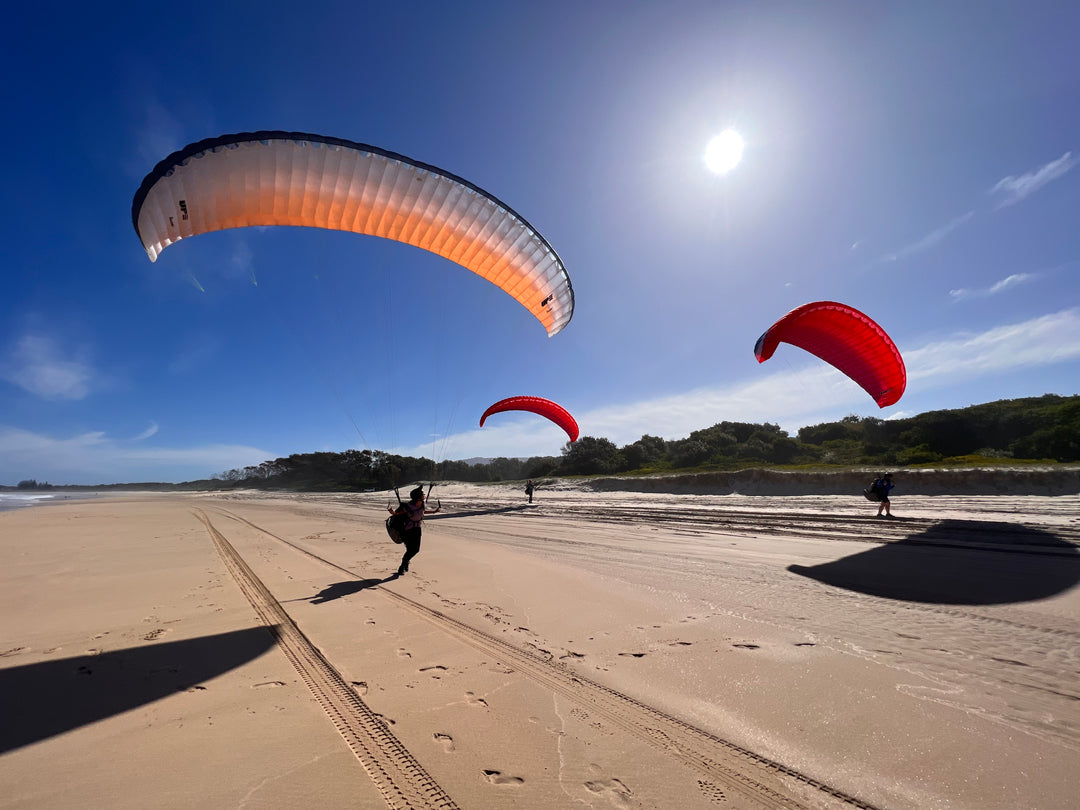
The pilot wears a harness with the motor attached to their back. To take off, the wing is first lifted overhead and brought under control. Once the wing is stable, the pilot starts the motor and then takes around 10–15 steps or a short run until they are lifted off the ground from the thrust of the motor.
Once airborne, you sit back into your harness and fly just like a paraglider pilot — with the added benefit of engine power.
What is Wheelbase Paramotoring?
Wheelbase paramotoring uses a trike-style frame with wheels.
Instead of wearing the motor on their back, the pilot sits in a lightweight wheeled frame that has the motor mounted behind them. The pilot starts the motor before the wing is lifted. Once the wing is lifted overhead and under control, the trike rolls forward until it is lifted off the ground from the thrust of the motor.
Wheelbase paramotoring offers the same experience of powered flight but removes the need to run during launch.
What’s the Same?
Although the launch methods are different, the core training and flying experience are very similar.
Both training options include:
-
The same foundational training
- Ground handling
- Launch techniques
- Flight control skills
- Safe landing techniques
-
The same in-flight controls
- Once airborne, the wing behaves the same in both systems.
-
The same course length and cost
- Both foot launch and wheelbase paramotor training follow the same course structure, duration, and pricing.
-
The same theory and exams
- Both pathways require the same aviation knowledge and licensing requirements.
In other words, once you're in the air, the flying experience is essentially the same.

What’s Different?
The main differences are in launch method and technique, steering, terrain requirements, and the wind conditions suitable for launching.
Launch Method
Foot Launch
-
Pilot launches from their feet
-
Typically involves 10–15 steps or a short run until the pilot is lifted off the ground from the thrust of the motor
Wheelbase
-
Pilot launches from a seated position in the trike
- The trike rolls forward until it is lifted off the ground from the thrust of the motor
Launch Technique
Foot Launch
-
Uses either a reverse launch or forward launch technique
-
With a reverse launch, the pilot faces the wing while lifting it from the ground, which makes it easier to control and stabilise the glider both before and after turning around to face the launch direction. It is only once the wing is stable that the pilot starts the motor and begins to move forward.

- With a forward launch, the pilot faces away from the wing and starts the motor before the wing is lifted from the ground. Once the wing is lifted overhead by walking forward and bringing it up from behind, the pilot has greater ability to keep the wing stable since they can step sideways if need be. It is only once the wing is stable that the pilot applies the power to the motor and begins to move forward.

Wheelbase
-
Uses only a forward launch technique
-
The pilot faces away from the wing, starts the motor, and then applies power to move forward in the trike while simultaneously lifting the wing overhead from behind. Once the wing is lifted, the pilot cannot step sideways to stabilise it, which requires stronger ground handling skills to keep the wing under control as the trike moves forward.
Launch Surfaces
Foot Launch
-
Can be launched from more uneven terrain (e.g. fields and beaches).
Wheelbase
-
Ideally requires a flatter, smoother surface for launching (e.g. short grass).
Weather Conditions
Foot Launch
- Can typically launch in nil wind up to around 15 knots, depending on pilot experience and site conditions.
Wheelbase
- Typically launches in nil wind up to around 5 knots, as stronger winds make it more difficult to safely control the wing during a trike launch.
Steering in Flight
Foot Launch
-
Pilots steer using both:
- Weight shift
- Brake controls
Wheelbase
-
Steering comes primarily through brake inputs on the glider, as weight shift is much more limited in a trike.

Which Option is Best?
Foot Launch - Best for Most People
For most students, we generally recommend foot launch paramotoring because overall it is easier to master.
It is:
- Easier to learn for most people
- Offers a wider range of conditions to fly in
- More versatile across different launch surfaces
- The most common form of paramotoring worldwide
Once learned, it gives pilots greater flexibility in where they can launch and fly.
Wheelbase - Best for Specific Situations
Wheelbase paramotoring can be a great option for people who would prefer to launch from a seated position, such as:
- Older pilots who would prefer not to run during take-off
- Anyone who simply feels more comfortable using a trike
It still offers the same incredible flying experience - just with a different launch style.

Ready to Start Your Paramotoring Journey?
If you’re unsure whether foot launch or wheelbase paramotoring would suit you best, get in touch. We’re always happy to talk through your goals, experience level, and any physical considerations to help you choose the training option that gives you the best start to your paramotoring journey.
If you already know which option you'd like to pursue, there are two ways to get started depending on your flying experience.
- If you’re new to flying, you can book the 14-Day Learn To Paramotor Course, which takes beginner pilots from zero experience to a fully licenced PPG pilot. You can choose either the Foot Launch or Wheelbase option when booking.
- If you’re already a licenced paraglider pilot (level PG4 or above), you can add paramotoring through our Foot Launch Paramotor Endorsement or Wheelbase Paramotor Endorsement.
If you’d eventually like to learn both styles of paramotoring, we generally recommend starting with foot launch first, as it is typically easier to master and provides a strong foundation in wing control and launch techniques. Wheelbase can then be added to your flying toolkit at a later date through the Wheelbase Paramotor Endorsement.
The sky is waiting - and we’d love to help you get there.


Leave a comment