Learn To
Paramotor
Learn To
Paramotor
Paramotor
ULTIMATE FREEDOM. ENDLESS ADVENTURE.


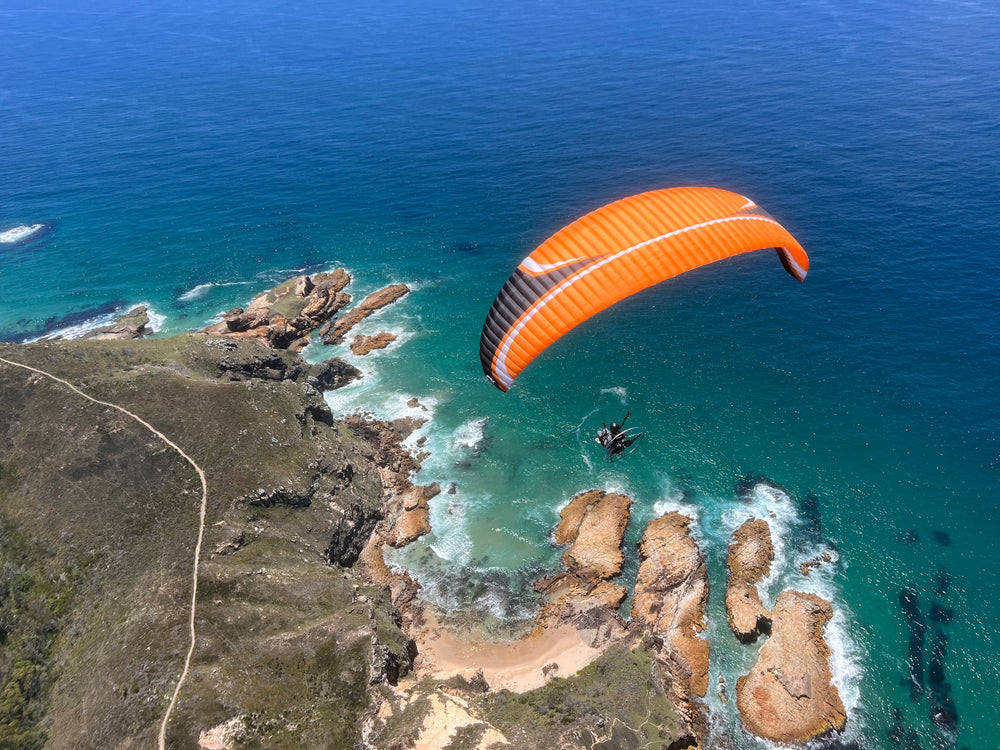
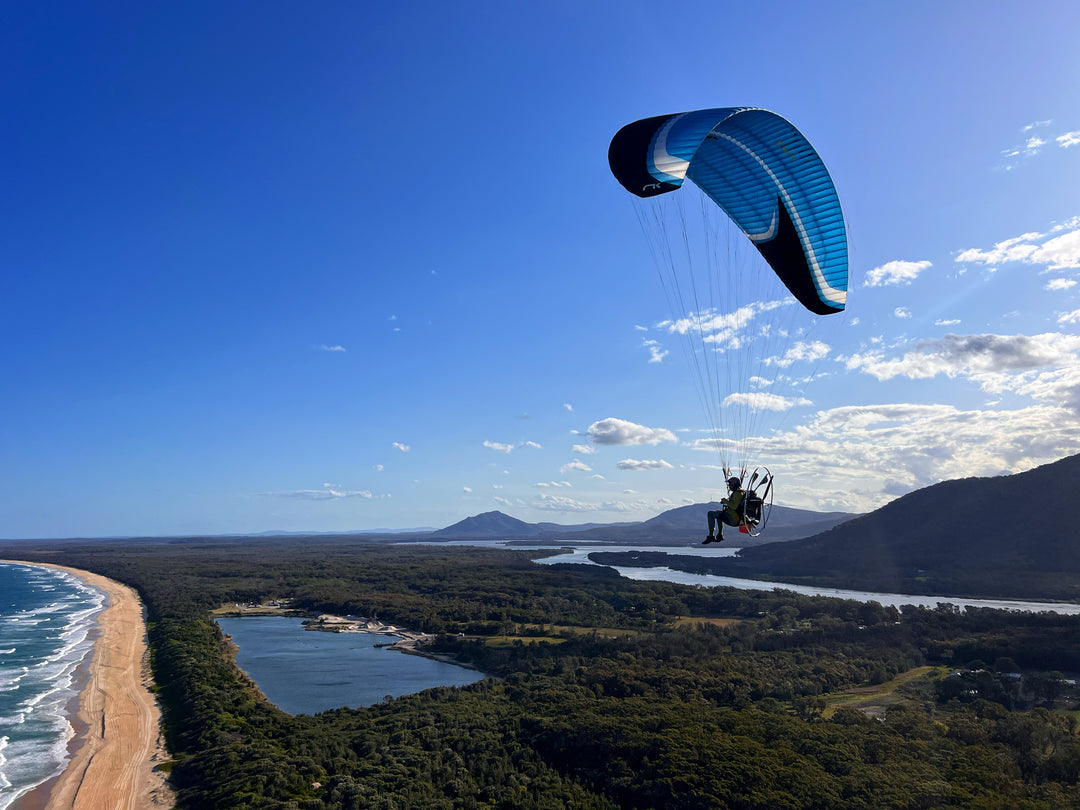
Our Learn to Paramotor Course will take you from complete novice to confident SAFA PPG pilot in just 14 days.
Led by world-class instructors, our extensive course is considered one of the best in Australia, taking you well beyond the minimum requirements to become a competent paramotor pilot.
Foot launch and wheelbase course options are available.
Please note: All our courses are run from our school in Laurieton, NSW.
Find out why High Adventure is the top paramotor school in Australia.

GROUND HANDLING: We put great emphasis on developing confident ‘kiting' so our pilots learn how to respond to their glider and understand it's reaction.
LAUNCHING TECHNIQUES: Forward launch techniques for low-wind conditions and reverse launch for higher wind conditions.
LAUNCH & LANDING PRACTICE: Build confidence to safely transition to flight and learn to assess ground conditions and safe landing options.
EQUIPMENT REVIEW & PRE-FLIGHT CHECKS: Learn about the equipment and how it works, plus learn how to conduct a paramotor and gear pre-flight safety check.
PARAMOTOR SIMULATOR TRAINING: Practice kiting your glider with the additional weight of the motor and get acquainted with the throttle. Getting a feel for the engine and what it’s like to apply power is a key technique for you to master.


It's what you've been waiting for! You'll perform launch sequences, now simply adding power. You'll practice launching, landing, and turns through radio assisted instructed flights. Lots of flights, ‘touch and go’s’ and some absolutely stunning cross-country flying are ahead of you.
When the conditions aren't right for flying, we use this 'down time' for theory classes.
The SAFA Training Syllabus is thorough, and so are our theory classes. Topics include: airspace rules and regulations, drag and thrust, torque effects, principals of flight, meteorology, emergency procedures and navigation.
Assessment of theory is via multiple choice exams.
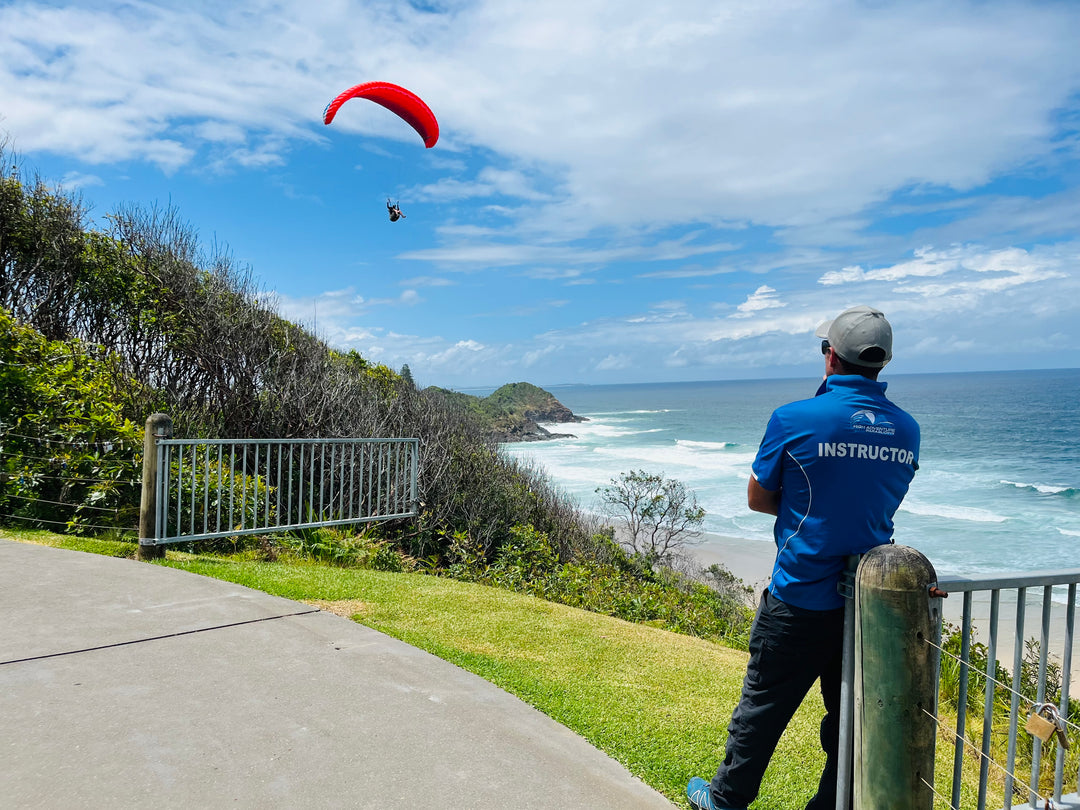


Pre-flight checks * Flight preparation * Airspace regulations * Flying with other aircraft * Inflation/Taxi/Launch sequence * Launch and landing techniques * Launch and landing in various wind strength and conditions * Landing accuracy * Cross wind and downwind landings * Flight Path * Flight Skills * Turns * Safe use of Trim Tabs/Speed System * Inflation, Taxiing and Deflation utilising the motor * Fuel management * Motor Safety * Weather assessment * and more!

Discover the best way to become a fully licenced paramotor pilot. Check out training options, licence pathways, and what you can do once you’re flying PPG - helping you choose the route that’s right for you.


With access to 13 different training and flying sites, we can make the most of varying wind and weather conditions while giving you experience across different slopes, terrain, coastal and mountain environments. This means more time developing practical flying skills and a diverse training experience designed to build confident, capable pilots.
Stay right here at High Adventure with a choice of comfortable, convenient accommodation options on-site at our school in Laurieton. Whether you prefer your own private space or a more affordable shared option, you’ll have everything you need for a relaxed stay during your course.
Please note: Accommodation is not included in course fees. Booking is required and additional costs apply.
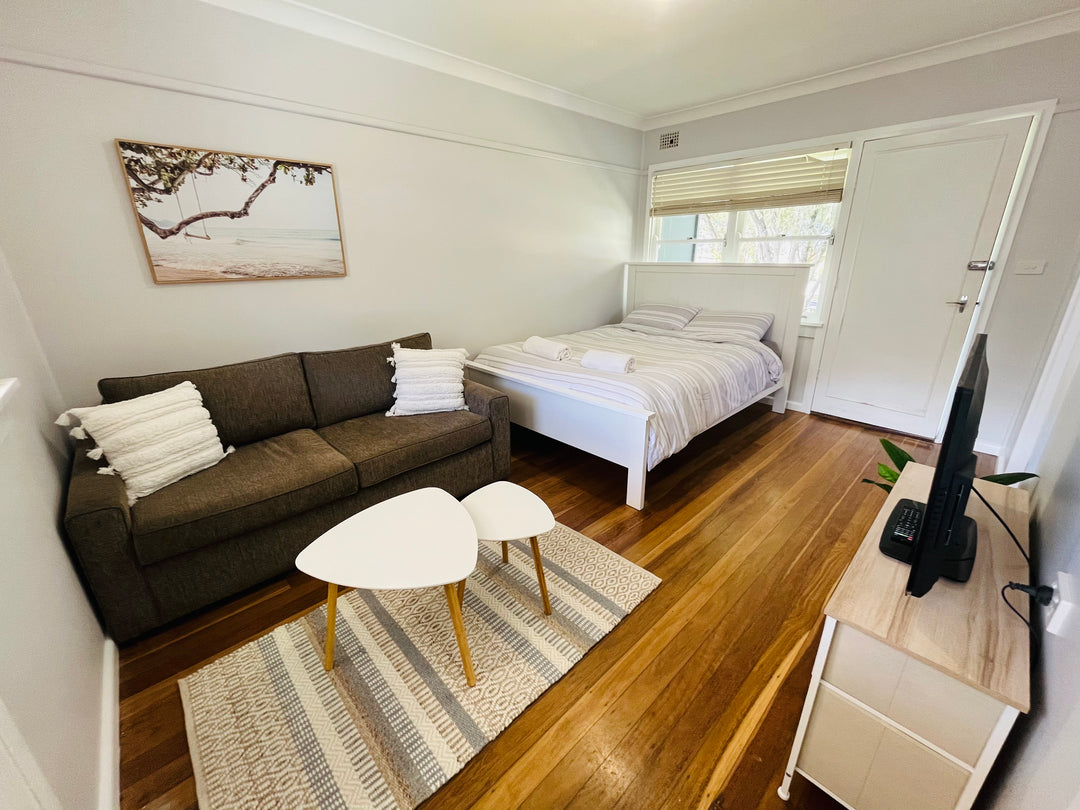
$95 per night
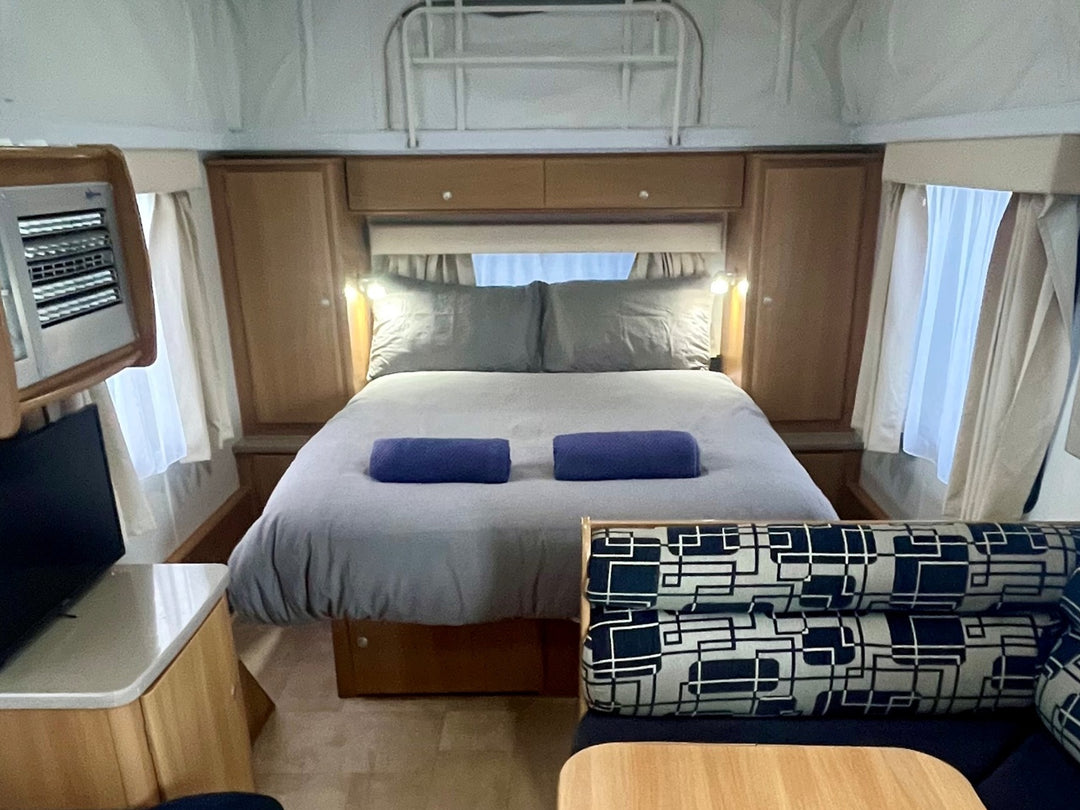
$75 per night
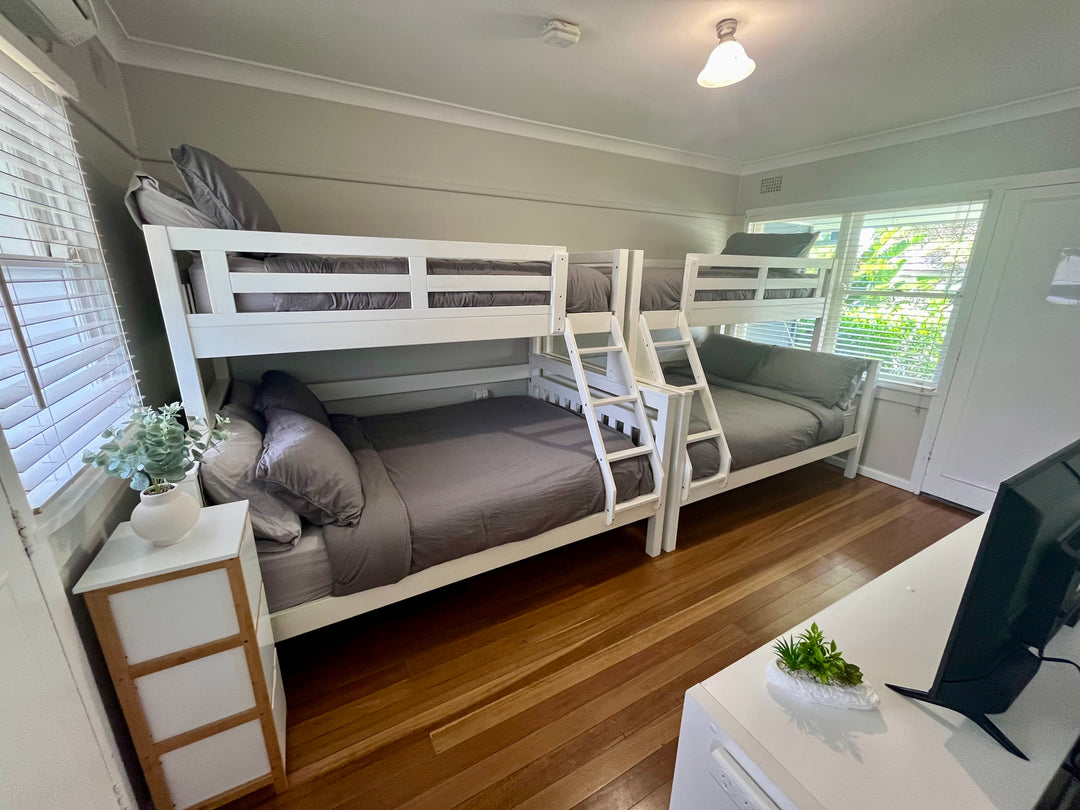
$55 per person, per night
Paramotoring, or powered paragliding, combines a paraglider wing with a lightweight motor and propeller worn on the pilot’s back. Unlike paragliding, you don’t need a hill or mountain to launch from — the motor provides the thrust needed to take off from flat ground and gives you the freedom to explore from the air.
Like all forms of aviation, paramotoring involves risk, but good training, sound decision-making and appropriate weather conditions all play an important role in managing that risk. At High Adventure, our focus is on developing safe, confident and competent pilots, with a strong foundation in wing control, equipment handling, weather awareness and practical flying skills.
The current minimum age restriction set by the SAFA for paramotoring is 15 years. There is no upper age limit.
Paramotoring does require a certain amount of physical activity. Anyone with a moderate level of fitness should be more than able to complete the training.
There are some training sites where you will walk a short distance uphill after landing to go back to the launch zone. Students need to be comfortable walking uphill carrying paragliding gear weighing approximately 7kg.
When paramotoring, students will need to be able to carry 27kg (approx weight of paramotor) on their back and run a short distance for take off.
We've taught students who are well into their 60s and 70s so the fitness requirements are very manageable.
If you have any health issues or injuries that you think may impact your ability to do the training, please get in touch with us to discuss this before booking.
You have the option of using gear supplied by us or using your own gear (cost differences apply).
There’s no required pre-reading as all theory will be covered during the course. However, if you’re keen to do some optional reading before the course starts, ‘Paragliding: The Beginner’s Guide’ is a great introductory book.
You will need to register with SAFA on a New Student Pilot Membership 7 - 10 days before the start of your course. The cost is $33 (not included in our course fees) and is payable by each student directly to SAFA upon registration. You will be sent information on how to do this via email 2 weeks before the start of your course.
Our courses allow for bad-weather days, with theory completed when conditions aren't suitable for flying. It’s uncommon for weather to prevent course completion, but if you need additional training, you can join a future course within six months at no extra cost.
Typical student numbers per course are:
As these courses overlap for the first 7 – 9 days, we limit the combined total to 8 students.
During the final 5 days, there will be 3 - 5 paramotoring students only.
With two instructors, this means students typically receive instruction in small groups of just 2 – 4 students per instructor, allowing for personalised coaching and support throughout the course.
It's our duty and professional responsibility to ensure our students are fully competent and safe pilots. We will sign off students for license issuance when they satisfy the SAFA requirements and when we are fully confident in their ability to fly competently and with the highest levels of safety.
We’ve been successfully operating since 2012, training thousands of students within our 9-day paragliding and 14-day paramotoring course structures, so we know that it is absolutely achievable to develop confident, safe, and competent pilots that meet the SAFA PG2 (paragliding) and PPG (paramotoring) licence requirements within these timeframes.
As with any flight school offering similarly structured courses, license issuance is successful for the vast majority of students, however it does rely on suitable weather conditions and students meeting required competency standards. More information on these situations are explained in our T&Cs.
Short answer: possibly.
Here’s how it works:
PPG Licence: The licence students earn on successful completion of the 14-Day Learn To Paramotor course is the SAFA PPG (Powered Paragliding) Licence - this is for paramotoring only.
Paragliding Licence: The licence students earn on successful completion of the 9-Day Learn To Paraglide course is the SAFA PG2 (paragliding) licence - this is for paragliding only.
Because the first part of the 14-day paramotor course covers paragliding training, some PPG students may meet the PG2 requirements during their paramotor course.
However, we cannot guarantee that our PPG students will receive a PG2 licence because:
If achieving the PG2 licence is important to you, let us know and we’ll support you where possible - but it depends on weather conditions and individual progress.
If you get your PPG licence but not a PG2 licence, you can complete a 3-Day Paramotoring to Paragliding Endorsement later to earn your PG2 paragliding licence. This can be done with us and allows you to expand your skills into free-flying in addition to paramotoring. This may be possible immediately after your Learn To Paramotor course, depending on weather conditions and instructor availability.
As a newly licensed PPG pilot, your first 10 hours of flight time must be completed under the supervision of a certified PPG Safety Officer. High Adventure can connect you with a certified PPG Safety Officer in your area to complete your supervised hours. Once these are completed, you are able to fly solo without ongoing oversight.
When you first receive your PPG licence, you’re permitted to fly up to 25 nautical miles from launch. Once you reach 25 hours of total flight time, you can complete a Cross-Country Endorsement, which removes distance limits entirely.
Australia has restricted airspace rulings that any PPG pilot must follow and guidelines for flying in high-density areas. Outside of controlled airspace, you are free to fly anywhere you like. Currently, Australia has a legal height limit for flying PPG which is 12,500 feet.
We can put you in touch with paramotor pilots in your local area after the course.
More information on what's next after achieving your PPG licence can be found in this blog.
No, this is not possible. Our beginner courses are 'straight-through' courses over 9 consecutive days (paragliding) and 14 consecutive days (paramotoring). We believe that training over multiple blocks spread across a longer period or on weekends only can disrupt the continuity of learning, potentially leading to a reduction in skill retention, a dip in confidence, and slower progress. Unsuitable weather conditions are also much more likely to cause delays in course completion. These factors are why we don’t provide the option to split our courses across multiple blocks or on weekends only.
This may be okay, however we cannot guarantee that missing days won't affect a student's ability to meet all the theoretical or practical requirements of their course. Each day's training is tailored to the weather conditions, so missing any part of the course could potentially impact your ability to achieve all the requirements for license issue. We strongly recommend attending every day of the course where possible.
Address - 3 Mill Street, Laurieton, NSW, 2443.
By plane - there are several options:
1) Fly to Port Macquarie Airport then travel by car (35mins).
2) Fly to Sydney Airport then travel by car (4.5hrs) or by train (7hrs).
3) Fly to Newcastle Airport then travel by car (2hrs).
By train - you can travel with NSW TrainLink to our nearest station, Kendall Train Station (15mins from our location).
Pick-Up / Drop-Off Service: If you need transport to/from our school, we can organise transport from Port Macquarie Airport ($80 each way) or Kendall Train Station ($30 each way), subject to availability. If you'd like to book, please send us your flight or train details, including your arrival and departure dates and times.
We offer comfortable and convenient accommodation on-site at our school in Laurieton. Choose from a private cabin, private caravan with shared bathroom facilities, or shared cabin accommodation, each with everything you need for a relaxed stay.
Alternatively, there are a range of hotels, motels, AirBnbs, caravan parks and camping sites nearby.
Yes, you can change or cancel your course booking. Our policies for course changes and cancellations can be found here.
★★★★★I completed the two week PPG course and got to fly in many different spots over the most spectacular scenery you could ask for. Dave’s ability to communicate instructions calmly and clearly goes way beyond his amazing skill set. Not everyone has this gift. If you want to learn to fly, why on earth would you go anywhere else in Australia? High Adventure is a one stop shop that has it all!
Ray B
NSW
★★★★★If you are in Australia and want to learn to fly, this is the place to go.
I flew from perth to get trained by Dave. It's not only the super competent and welcoming staff, the actual paragliding spots around Laurieton are just splendid. Go fly!
Sylvain A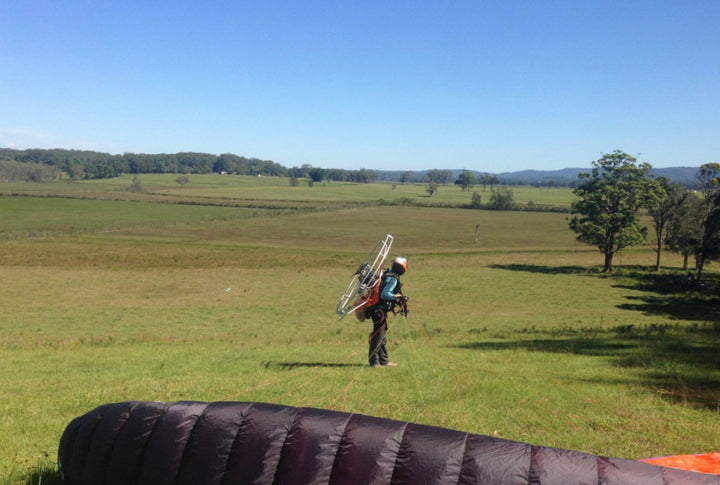
WA
★★★★★The PPG straight through course was exceptional. Dave's skill and calm guidance throughout the course had us up and ridge soaring in days. We built our theoretical knowledge when the weather wasn't great and flew constantly when it was. The progression culminating in cross country paramotor flights on the last day was amazing. Dave continues to support his students after the course with supervised flights, putting us in touch with local people in the community and organising to ship gear across the country. Thanks for the experience!
Ben P
WA
★★★★★Awesome experience. The course was flexible and took every opportunity to work with the weather, the skill sets of the group and above all keeping everyone safe. Dave was the calm voice in your ear when you were off the ground and knew exactly what to say to keep you up longer and enjoy your time in the air!
100% recommend!Donal M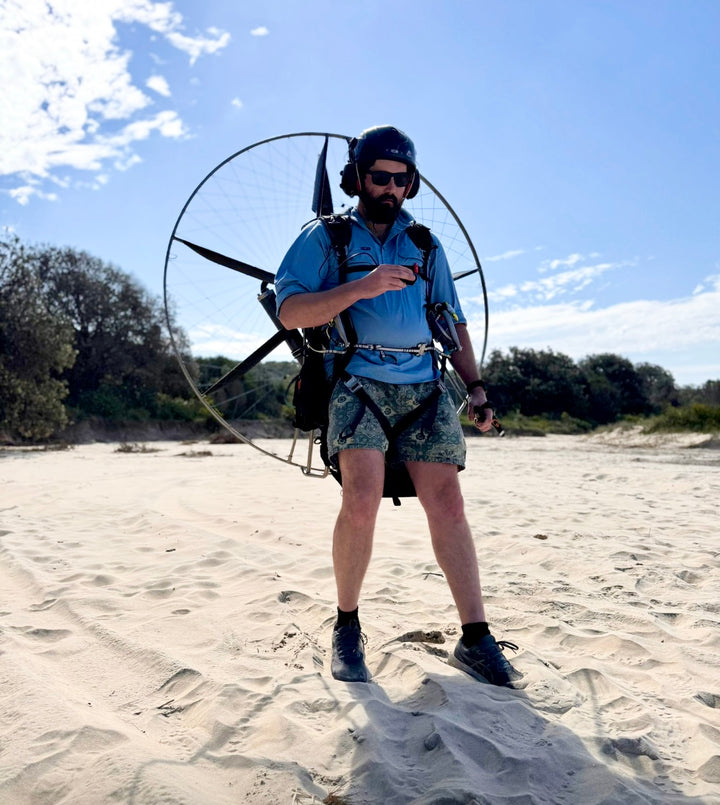
QLD
★★★★★What a fantastic experience all round! Dave's clear, direct, patient and expert style of teaching was tailored to each individuals' needs. And Laurieton has to be the best paragliding and paramotoring location in NSW....simply stunning!! I have since purchased all my gear through Dave because I view him as an expert one-stop-shop across all facets of the sport.
Marty P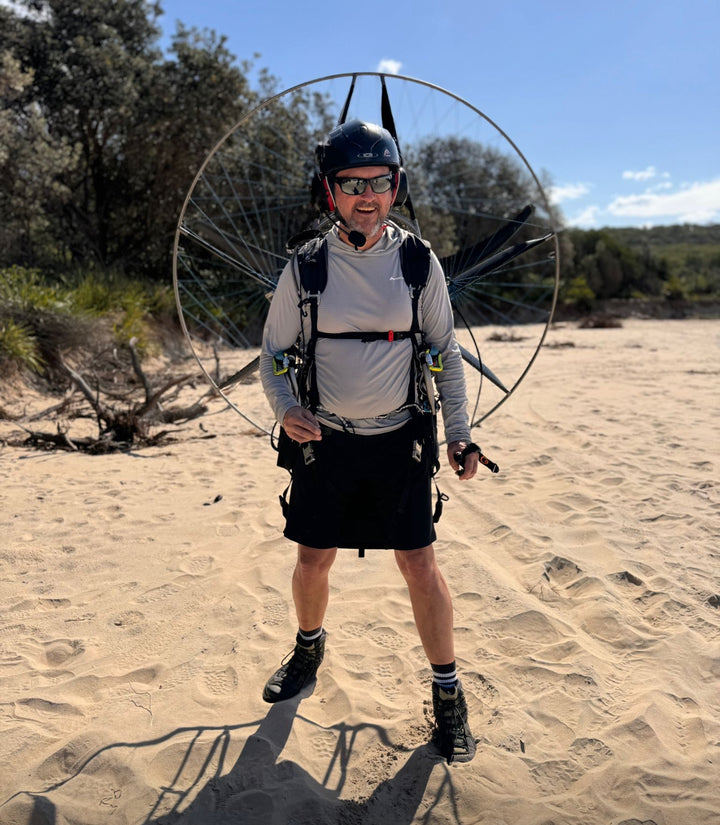
NSW
★★★★★Dave was very calm and patient with all of us whilst we were learning how to fly. The expertise and knowledge was 2nd to none and we felt confident and safe at all times knowing that we were in great hands. Highly recommend this course to anyone that wishes to learn how to fly or hone and improve their current skills.
Matthew S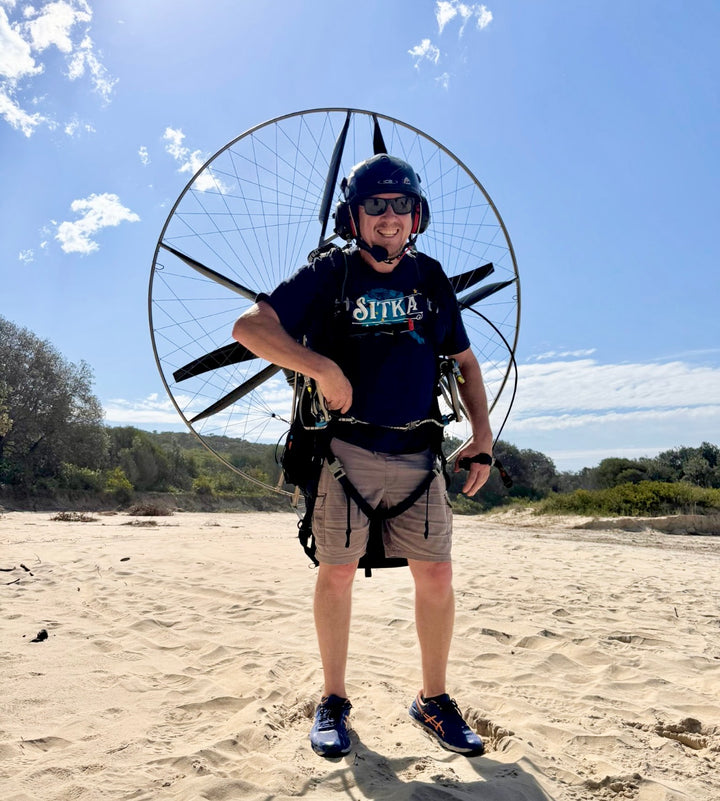
NSW
★★★★★What a life changing experience. Dave was patient, understanding and professional at all times.
One of the best things you will ever do in your life.
Dave certainly makes the experience a rewarding, pleasurable and memorable experience for any ages.Sarah, Scott & Cody R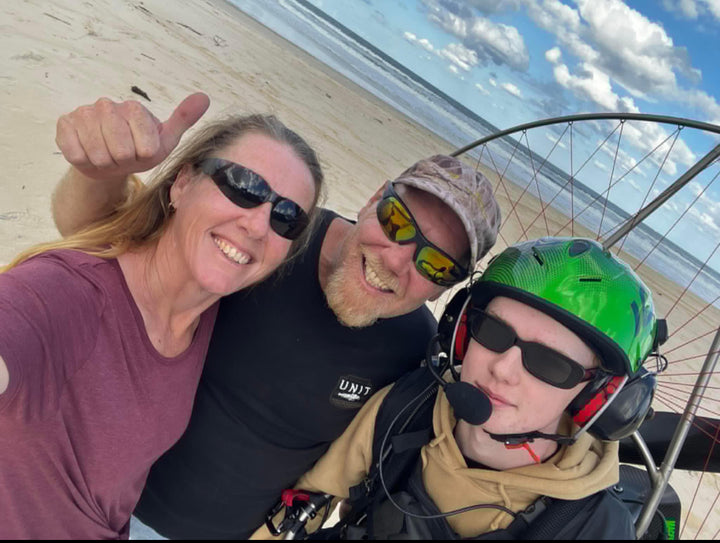
NSW
★★★★★Amazing experience - I learnt heaps. Really improved my skills, kite handling and launching. I’m so much more confident and skilled at launching and landing in tricky winds. You won’t find better instruction. And what a great place to learn to fly, there are so many sites to fly.
Marcus H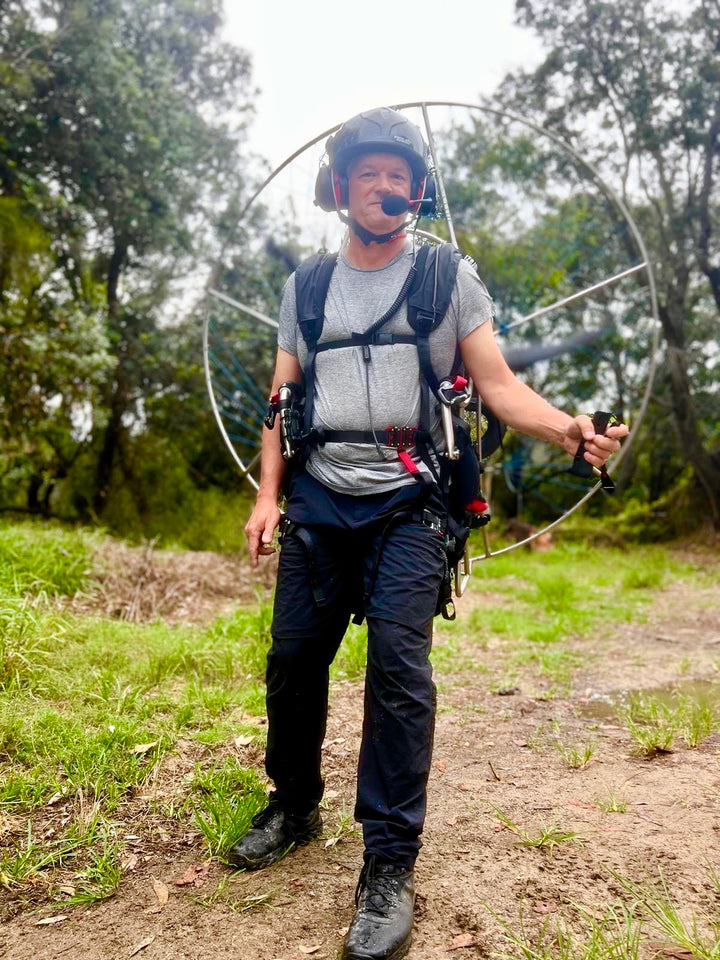
TAS
★★★★★Simply an awesome experience. Dave is a patient instructor who knows his topic very well.
Highly recommended and would go back again just to fly or for further training.
The school accommodation is great, Dave and Nikki were great hosts who made the stay there amazing.Sean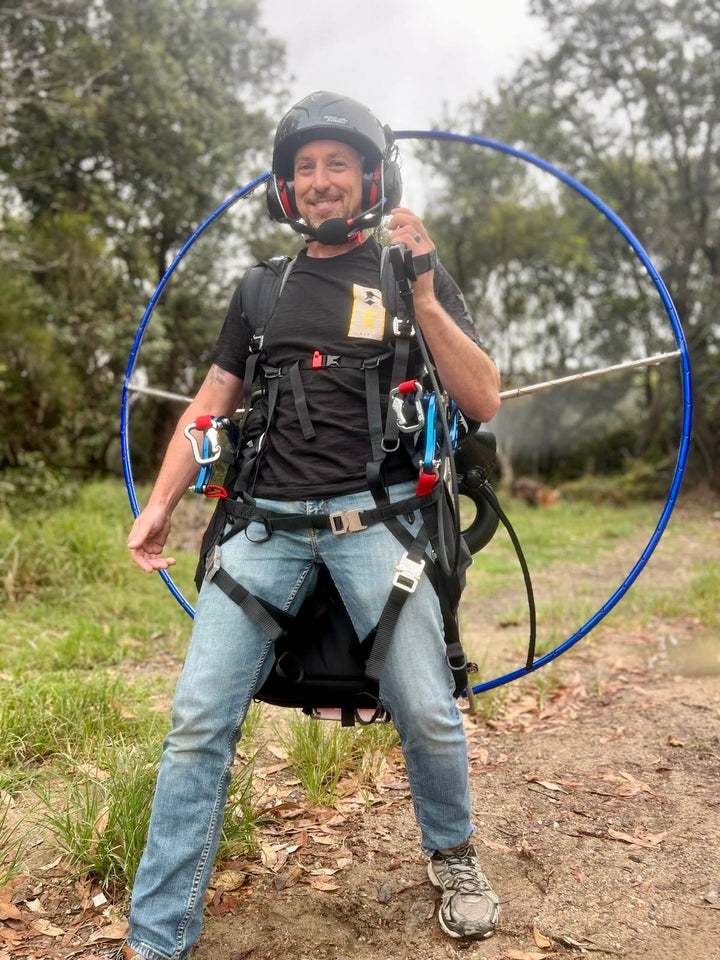
WA