

How much does paragliding cost, and what's involved?

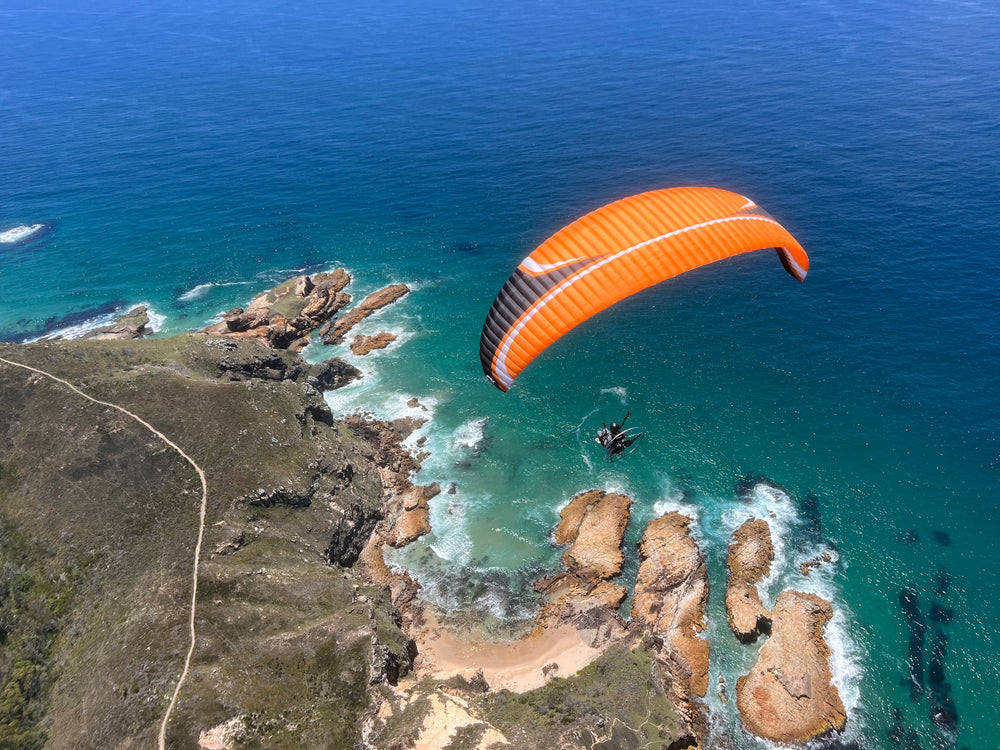
Imagine feeling your feet lift off the ground as you soar through the air, taking in ocean and coastline views.
You see birds gliding beside you, feel the rush of the wind, and take in breathtaking views on the horizon.
You thought you'd be scared. But instead, you feel exhilarated. And by the time you touch back down, all you can think about is your next paragliding adventure.
Sounds good?
Well, that's exactly what you'll experience if you ever decide to try paragliding.
Now, because paragliding involves taking to the air, many of our students and customers naturally have a lot of questions before diving in.
So, to help you decide whether paragliding is right for you, we've put together a short guide that covers everything you might want to know, from how much paragliding costs to safety concerns and learning to fly solo.
What’s the difference between paragliding, paramotoring and parasailing?
Paragliding is a recreational and competitive sport. A paraglider is basically a large fabric wing with a harness suspended below it, connected via a network of thin (and strong!) rope-like lines. To fly, pilots launch from headlands, hills or mountains and rely on rising air currents (known as lift or thermals) to gain altitude and stay airborne.
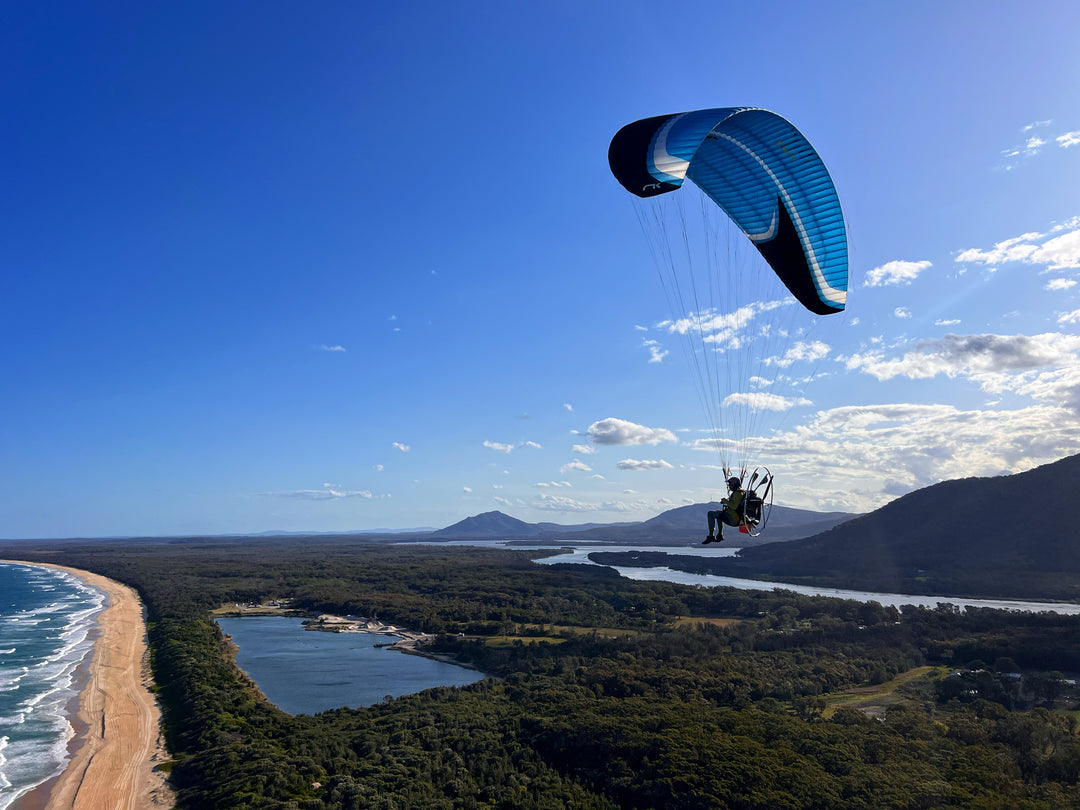
Paramotoring is a form of powered paragliding. When paramotoring, in addition to flying with their harness and wing, pilots wear a small engine with a propeller on their back. But how does it work exactly?
The motor gives the pilot thrust. So, instead of relying purely on wind and thermals to fly and gain altitude like regular paragliding, you can take off from open, flat areas, climb under your own power, and fly in a much wider range of conditions than paragliding alone.
Lastly, parasailing is a recreational activity in which a person sits in a harness under a parachute-like canopy (called a parasail) and glides through the air as they are towed behind a moving boat.
Unlike paragliding, the person doesn't control the flight.
The boat controls how fast and where you go while you fly above the water connected by a rope.
If you’re interested in learning more about some of these disciplines, feel free to read our article about the difference between paragliding and parasailing.

How much does paragliding cost?
Our Tandem Paragliding flights are priced at $295 and will allow you to either soar along the beautiful Mid-North Coast of New South Wales or above breathtaking mountain landscapes. All of our flights are led by highly skilled and certified pilots.
Now, if you’re looking to learn how to fly solo, you can join our 9-Day Learn To Paraglide Course, priced at $3000, which takes you from complete beginner through to achieving your SAFA PG2 Pilot Licence.
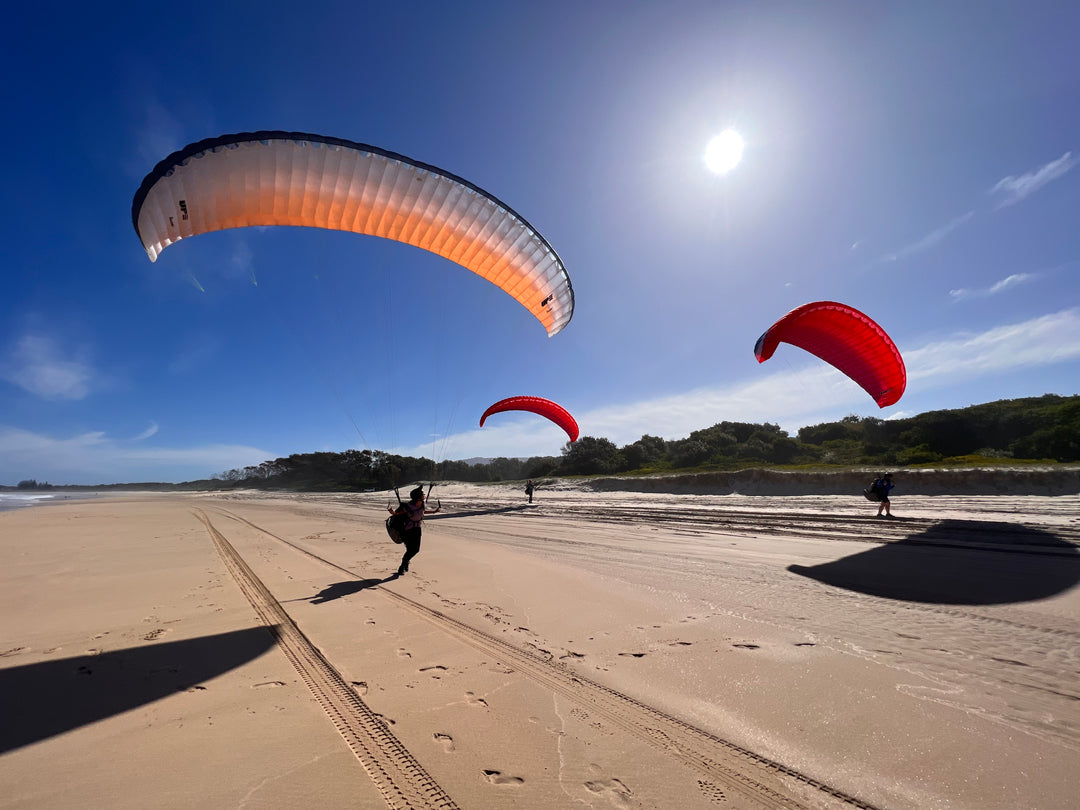
Or, if you’d prefer to try paragliding before committing to the full course, you can join our 2-day Intro Course, priced at $600, where you’ll learn the basics of ground handling, launching and landing, and experience your first solo flights under radio instruction (weather permitting).
More than just paying for a flight or course, you're investing in quality instruction, experienced SAFA-qualified pilots and instructors, carefully selected flying sites, and a safe, supportive experience from start to finish.
Where is the best place to paraglide in Australia?
The mid-north coast of NSW is home to some of the best paragliding locations in Australia. And it's exactly where High Adventure is based!
If you’re looking for a tandem flight along the coast, we launch from picturesque spots including Port Macquarie, Bonny Hills and Indian Head, offering stunning views over pristine beaches and the ocean below.
Or, if you’re more into mountain flying, we fly from two incredible sites: North Brother and Middle Brother. Both sites offer absolutely breathtaking views across the region.
If you’re looking to learn to paraglide, one of the things that makes High Adventure unique is our access to 11 different training and flying sites within a short drive of our school.
These include gentle training hills for beginners, expansive coastal sites with soft beach landings, and spectacular mountain launches offering exceptional soaring and thermic flying.
Having access to so many sites means we're able to choose the best location based on the day's weather conditions, giving students more opportunities to fly and experience a wide variety of terrain, wind directions and flying conditions.
This variety helps students develop into safe, adaptable and confident pilots who are comfortable flying in a range of locations and conditions.

How long do paragliders fly?
It depends on the type of experience you’re looking for:
Tandem flights: If you opt for a tandem flight, expect to spend around 15 minutes in the air with your tandem pilot.
In that time, you'll soar above the beautiful coastline, between Port Macquarie and Indian Head, or the mountains of North Brother and Middle Brother in NSW, taking in sweeping views that most people only ever see from a plane window!
Solo flights: Once you're a qualified pilot, how long you stay in the air depends entirely on the weather conditions and your flying goals.
On a good day, you might enjoy a short 15-minute flight or stay airborne for several hours by making use of lift and thermals.
Some pilots enjoy longer soaring or cross-country flights, while others prefer to complete multiple shorter flights to practice specific skills such as launching, landing or advanced maneuvers.
Is paragliding difficult to learn?
Paragliding is more accessible than you might think. The good news is that you don't need to be an athlete to get into paragliding. A moderate level of fitness is enough to get through the training. In fact, High Adventure has successfully taught pilots well into their 60s and 70s!
That being said, becoming a safe and confident pilot requires structured, hands-on training. At High Adventure, our 9-Day Learn To Paraglide Course takes students from complete beginner to SAFA PG2 licence level.
Throughout the course you'll learn ground handling, launching and landing techniques, weather assessment, flight planning, theory, radio-assisted flights and much more, all under the guidance of experienced SAFA-qualified instructors.
How safe is paragliding?
When it comes to tandem paragliding, safety is always the top priority. Our pilots are highly trained to follow strict procedures, and every flight includes thorough equipment checks and full passenger briefings.
Also, to legally fly tandem, pilots must be certified and insured with SAFA, the official governing body for paragliding in Australia.
This ensures every flight meets rigorous safety standards for everyone involved.
Learning to fly solo safely begins with quality training.
During a structured beginner course, students develop the knowledge and practical skills needed to make safe decisions both on the ground and in the air.
Once licensed, pilots continue building experience gradually by flying within their licence level, choosing suitable weather conditions and sites, and only attempting flights that match their experience and ability.
Like many adventure sports, good judgement and ongoing learning are key to flying safely.

Do you need a license to fly a paraglider in Australia?
Yes, if you want to fly solo, you need a license to fly a paraglider in Australia. The Sports Aviation Federation of Australia (SAFA) regulates the sport and ensures all pilots meet strict safety and training standards before flying solo. To get licensed, you’ll need to complete a structured beginner course, like our 9-Day Learn to Paraglide Course, which combines theory and practical training.
You’ll find more information on our blog: Do you need a license to paraglide in Australia?
Can you paraglide with no wind?
In some instances, yes. You can still launch in nil wind from a suitable hill, coastal headland or mountain, but without rising air to keep you aloft, you'll simply glide back down to the landing area. This means your flight will generally be much shorter than it would be in soaring or thermalling conditions.
During our beginner courses, we can also use winch towing on the beach, allowing students to experience flying even when there is little or no wind. This gives us greater flexibility and more opportunities to get students airborne throughout their training.
Minimum age for paragliding?
Ages depend on what you're after. If you want to learn to paraglide, the minimum age is 14 (with a parent's consent), and you'll need to be 15 to become officially licensed. However, if you're just after a tandem flight, the minimum age is 11.

Ready to experience paragliding?
Whether you're looking to experience the thrill of a tandem flight or want to learn to fly yourself, paragliding is an unforgettable way to see the world from a completely different perspective.
At High Adventure, we've been introducing people to the sport for over 30 years through scenic tandem flights and high-quality SAFA-approved training courses. Our experienced instructors, small class sizes and access to multiple flying sites give you the best possible environment to enjoy your first flights and develop into a safe, confident pilot.
View our Tandem Flights or Learn To Paraglide Course today, or get in touch if you have any questions - we'd love to help you take your first step into the sky.


Leave a comment